![AERO 40 Ⅱ ディスクブレーキホイール[リム内幅23mm] - ICANホイールジャパン](http://icanjp.com/cdn/shop/files/1_d90bc651-48bd-4f22-9e13-6d963c283ba6_1370x.jpg?v=1753869976)
![AERO 40 Ⅱ ディスクブレーキホイール[リム内幅23mm] - ICANホイールジャパン](http://icanjp.com/cdn/shop/files/2_37e9600e-9785-4d45-abe1-df49da71e7ee_1370x.jpg?v=1753869976)
![AERO 50 Ⅱ ディスクブレーキホイール[リム内幅23mm] - ICANホイールジャパン](http://icanjp.com/cdn/shop/files/ICANAERO50IIDiscWheels_1_1370x.jpg?v=1758088613)
![AERO 50 Ⅱ ディスクブレーキホイール[リム内幅23mm] - ICANホイールジャパン](http://icanjp.com/cdn/shop/files/ICAN_AERO_50_II_Disc_Wheels_2_1370x.jpg?v=1758088881)


![FL40Ⅱ ワイドリムロードカーボンホイール 軽量「内幅23mm] - ICANホイールジャパン](http://icanjp.com/cdn/shop/files/1_771b4686-2e73-4d35-b47c-b123b298f7f7_1370x.jpg?v=1755486826)
![FL40Ⅱ ワイドリムロードカーボンホイール 軽量「内幅23mm] - ICANホイールジャパン](http://icanjp.com/cdn/shop/files/2_76389d17-9f29-42af-aa59-a695414fcaf7_1370x.jpg?v=1755486826)
Sports Bicycles for Beginners
We at ICAN are all staff members who love sports bikes. However, there are various types of sports bikes. And since all of them have their own unique charm, it's quite a dilemma. Here, we'd like to talk about the appeal of road bikes, cross bikes, MTBs (mountain bikes), and BMX, mainly from their respective perspectives.
If you want a sports bike but don't know what to buy, this is an introductory guide for you. We hope you'll stay with us to the end.
Road Bikes and Cross Bikes
There's a reason these two genres are grouped together. When people first consider buying a sporty bicycle, they often find themselves wondering whether to choose one or the other.
① Which to choose
Think about it. Someone who has been riding a 20,000 yen bicycle is suddenly buying a 50,000 or 100,000 yen bicycle. Isn't it often the case that they want to try one of these entry-level models? A cross bike typically starts at 50,000 yen, and a road bike at 100,000 yen. The choice of which to buy is naturally determined by your intended use.
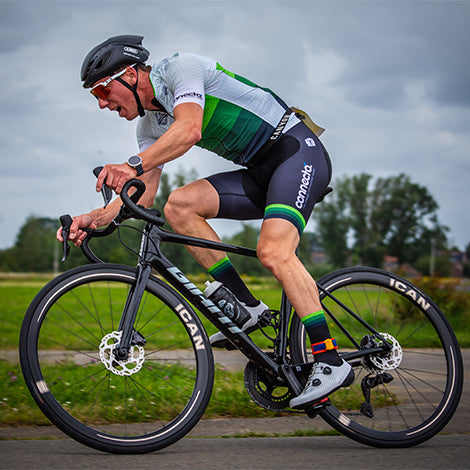
If you want to use it for practical purposes like commuting to work or school, as well as touring, then a cross bike is definitely the way to go. Road bikes are not designed for practicality. For example, it's customary not to attach a kickstand to a road bike. This is because riders want to eliminate any unnecessary weight. Even this one point shows that road bikes lack practicality. There's also a higher risk of theft with road bikes. You can't just casually park them anywhere.
② How to buy a cross bike
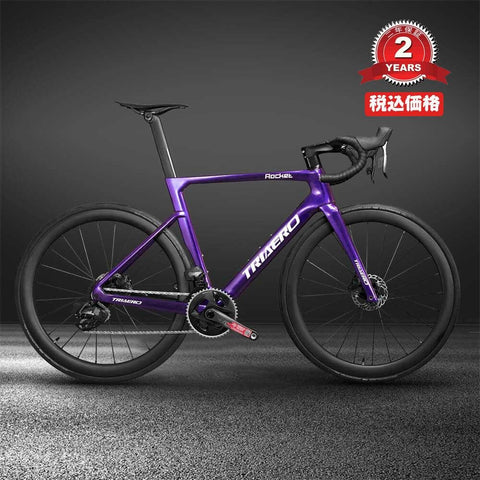
Cross bikes originally started as a hybrid of road bikes and MTBs. Among them, there are various types, from road-oriented models to MTB-oriented models. We recommend models with characteristics in the middle range.
Bicycles have mechanical parts such as derailleurs and brakes, which are collectively called "components" (or "comps"). Whether they use road bike components or MTB components indicates their leanings. It's easy to tell the difference: look at the number of chainrings, the large gears attached to the crank and pedal. If there are two, it's for road bikes; if there are three, it's for MTBs.
Mid-range models can be found with both two and three chainrings, but we recommend the road type with two gears. In recent years, the idea that cross bikes don't need three gears has been gradually spreading, and there's a possibility that they will eventually all become two-gear models. Moreover, one extra gear adds weight, and three gears are more difficult to adjust.
③ What is the decisive difference between a cross bike and a road bike?
Now, let's talk about the decisive difference between cross bikes and road bikes. The frame design (geometry) of cross bikes is stability-oriented, while road bikes are performance-oriented. Let me tell you how to distinguish them at a glance.
First, pay attention to the vertical pipe (seat tube) that extends from the saddle to the pedal axle (BB). Then, look at how close the rear wheel is to it. On a road bike, it's very close, while on a cross bike, it's a few centimeters apart. Furthermore, the fork supporting the front wheel is more reclined on a cross bike. As a result, the distance between the two tires is longer on a cross bike, which leads to greater stability. In contrast, on a road bike, the distance between the two tires is shorter, resulting in agile handling and acceleration.
④ Recommended price ranges for each
For cross bikes, models costing 50,000 to 70,000 yen are recommended. For road bikes, depending on your perspective, a model around 150,000 yen using Shimano 105 components would be a grade you won't regret. In either case, it's essential to choose a size that fits your body type.
Related article: How to Choose and Buy a Road Bike for Beginners
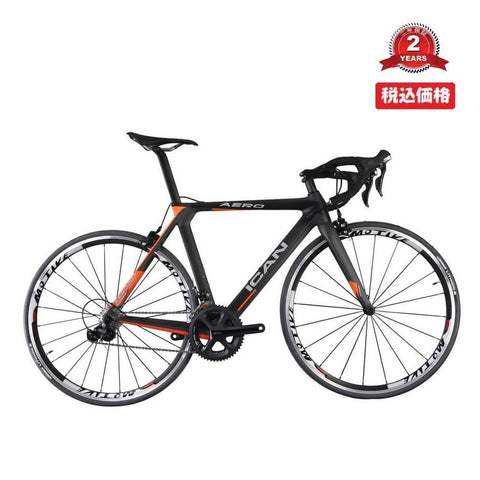
ICAN Road Bike: TAURUS 167,300 yen (tax included)
ICAN's top-recommended road bike with superb cost performance. Aero carbon frame, high-rigidity design, 7.85kg (52cm model), full Shimano 105 set.
MTB (Mountain Bike)
Just as road bikes are seen as tools for sports, MTBs are also tools for sports. Overseas, it is said that MTBs have a larger population than road bikes, but this is not felt in Japan. Let's start by talking about how MTBs can be a sport.
① Three types of competitions using MTBs
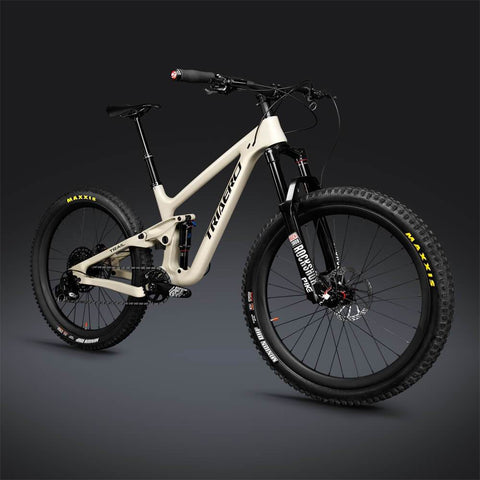
Downhill, where riders descend steep mountain trails at high speed; Enduro, where riders race against the clock on varied courses including downhill sections; and Cross Country, where riders traverse mountain trails with both climbs and descents. These three are the main types of MTB races. The MTBs used are also divided into freeride, all-mountain, and trail depending on the competition, and there are also fat bikes for snow and mud.
Initially, if your physical fitness is average, you won't be able to handle an MTB. A beginner might find their knees and arms trembling after just trying a short downhill. It's a sport that's truly worth the challenge.
 ② MTBs for urban riding
People who enjoy sports with MTBs, out of their love for MTBs, also want to use them for urban purposes. Currently, MTBs ridden in the city are divided into bikes ridden by such people and bikes ridden by those who use MTBs for city riding.
However, riding an MTB in the city often presents many inconveniences. After all, MTBs are large. Especially in the narrow streets of Japan, handling can be cumbersome. There was a big MTB boom around 1990, but now it has completely quieted down, which may be due to such circumstances.
What's interesting is that after the boom ended, some people, attracted by their coolness, acquired MTBs. While riding them in the city, it's human nature to want to venture into mountain trails. Thus, the MTB population should increase again... but in reality, it hasn't really happened.
The biggest obstacle seems to be the lack of MTB courses in Japan. Even if there are some, access to them often requires a car, which is inconvenient. Furthermore, from the perspective of nature conservation, information about courses is not widely disseminated. It's also common to accidentally venture onto private property.
③ The true joy of MTB
There is probably no other vehicle in the shape of a bicycle on Earth that is as enjoyable as this. Moreover, it requires a high level of skill. It is said that road bike riders who learn MTB greatly improve their technique, but MTB riders would probably think, "That's obvious."
④ How to buy an MTB
Having friends who ride MTBs is probably the easiest way to get involved. The type of MTB you need will vary depending on whether you choose downhill, enduro, or cross-country. For beginners, a model around 100,000 yen is highly recommended.
Reference article: How to Choose a Mountain Bike
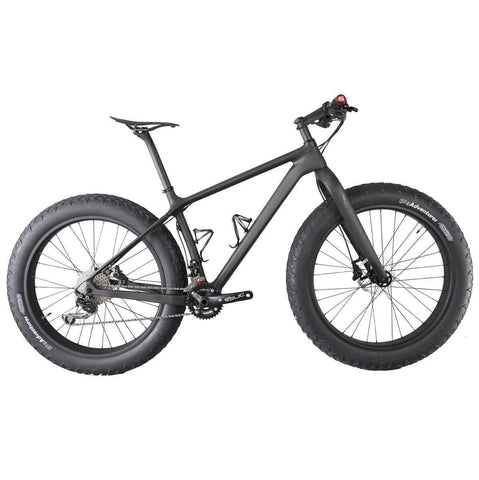
ICAN Fat Bike: 249,970 yen (tax included)
BMX
BMX, along with MTB, is an Olympic sport and a genre that garners attention.
① There are many kinds of BMX
BMX is broadly divided into three disciplines: race, street, and flatland. In the Olympics, two types of competitions are adopted: racing on rough terrain like motocross courses, and park, which is a type of street competition where riders compete in tricks on a course similar to a skateboard park. Furthermore, flatland is a competition where riders perform balance and spinning tricks on flat ground. Currently, street and flatland are mainly popular in Japan.
② Is BMX difficult?
It might be difficult to master techniques on your own. Receiving direct instruction from friends or acquaintances is the shortest path to improvement. Alternatively, watching videos online for riding tips might help you learn how to ride a BMX properly in a day. If you can do a bunny hop (jump), you'll immediately experience the fun of BMX. However, be sure to exercise self-control and avoid reckless challenges.
③ How to buy a BMX
Even though it's called a BMX, the structure of the bike differs depending on the discipline, so you need to determine which genre you want to pursue. If you want to start seriously, a budget of 45,000 yen or more is a good guideline. Choosing the right size is also important.
Other Sports Bikes
① Fixie Bikes
Fixies, a genre of classic bikes resembling road bikes, were once a hot topic in the city. Originally track racing bikes, they are incredibly cool. They are mainly suited for urban riding. Their completely minimalist design even lacks brakes. Later, due to safety concerns for city riding, the installation of brakes became mandatory. The absence of gears also contributes to their light weight. Although there are not many types, you can choose your preferred one according to your budget.
② Sports Minivelos
These are bikes primarily equipped with small diameter tires, typically 16 to 20 inches. Some even have configurations similar to road bikes, making them somewhat hobbyist and stylish. Their compact size makes them easy to maneuver, and they are very useful as sporty transportation for urban riding.
Reference article: The Key to Improving Minivelo Performance: Carbon Wheels
Summary
This time, the article was for those who are interested in sports bikes but haven't taken the plunge yet. Life is meant to be enjoyed. There's no time to hesitate. Action is everything. At ICAN, we're here to answer all your questions and concerns, so please don't hesitate to contact us. ICAN supports your cycling life!