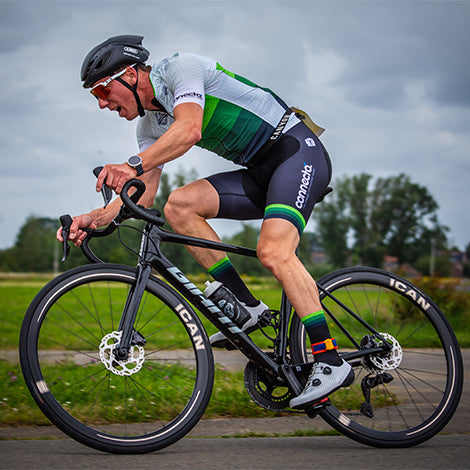
![AERO 40 Ⅱ ディスクブレーキホイール[リム内幅23mm] - ICANホイールジャパン](http://icanjp.com/cdn/shop/files/1_d90bc651-48bd-4f22-9e13-6d963c283ba6_1370x.jpg?v=1753869976)
![AERO 40 Ⅱ ディスクブレーキホイール[リム内幅23mm] - ICANホイールジャパン](http://icanjp.com/cdn/shop/files/2_37e9600e-9785-4d45-abe1-df49da71e7ee_1370x.jpg?v=1753869976)
![AERO 50 Ⅱ ディスクブレーキホイール[リム内幅23mm] - ICANホイールジャパン](http://icanjp.com/cdn/shop/files/ICANAERO50IIDiscWheels_1_1370x.jpg?v=1758088613)
![AERO 50 Ⅱ ディスクブレーキホイール[リム内幅23mm] - ICANホイールジャパン](http://icanjp.com/cdn/shop/files/ICAN_AERO_50_II_Disc_Wheels_2_1370x.jpg?v=1758088881)


![FL40Ⅱ ワイドリムロードカーボンホイール 軽量「内幅23mm] - ICANホイールジャパン](http://icanjp.com/cdn/shop/files/1_771b4686-2e73-4d35-b47c-b123b298f7f7_1370x.jpg?v=1755486826)
![FL40Ⅱ ワイドリムロードカーボンホイール 軽量「内幅23mm] - ICANホイールジャパン](http://icanjp.com/cdn/shop/files/2_76389d17-9f29-42af-aa59-a695414fcaf7_1370x.jpg?v=1755486826)
Road Bike Components: A History of Maturation
The fastest way to understand the evolution of road bikes is to trace the history of road racing.
This time, let's look back at the history of components and broaden our general knowledge (laughs) as road bike enthusiasts.
1 What kind of races were there before derailleurs?
The answer is simple. Bicycle racing was seen as a purely physical battle, not reliant on equipment.
Bicycles were invented in 1818, at the beginning of the 19th century. Initially, they were propelled by pushing off the ground with one's feet.
However, it is human nature for competitive spirit to emerge when two bicycles gather.
Early races were held on bicycles with unusually large front wheels and pedals attached directly to the axle. The first road race took place in 1869.
In the first modern Olympic Games in 1896, cycling was adopted as a sport. By this time, the basic form of the bicycle, as we know it today, had already been established.
And in 1903, the Tour de France also began.
As mentioned earlier, the initial thinking was that races should not rely on equipment, and this idea was genuinely prevalent, meaning technological progress did not directly contribute to road racing.

2 Industry innovation began!
Thus, bicycles began to approach their current form, but the first derailleurs were surprisingly primitive.
They involved attaching one rear sprocket to each side of the wheel (hub) and changing the gear ratio by removing the wheel and reversing its direction. In races, when approaching a change in terrain, riders would stop their bikes and remove and reattach the wheels.
However, the idea of changing gear ratios was a significant first step in subsequent evolution.
In the 1920s, 3-speed derailleurs were developed, but their quality was low and they were not used in races.
Furthermore, in the 1950s, external 5-speed systems appeared, but they still lacked competitive performance.
Nevertheless, various parts manufacturers competed to improve their technology, and bicycles were assembled by choosing and combining components such as derailleurs, brakes, and cranksets. This trend continued for quite some time, and many different parts manufacturers existed.

3 Technologies that are still relevant today blossomed
The first impetus to change this situation was Campagnolo's introduction of the groupset concept in 1959. This is the idea of unifying mechanical parts as a single series, which is commonplace today.
What solidified this trend was Shimano's introduction of the component concept in the 1970s.
At this point, derailleurs finally gained a competitive edge in road racing.
4 Remarkable evolution in recent years
Here's a bulleted list of subsequent developments:
・1983 Shimano developed the Index System (SIS), enabling precise shifting.
Dura-Ace also appeared around this time. 2x5 speeds.
This marked the beginning of multi-gearing.
・1990 Shimano added shift functions to brake levers.
Introduced as Dual Control Levers.
・1991 Shimano established the STI system, which continues to this day.
Its superiority in racing became evident.
Campagnolo also developed a similar mechanism called Ergopower.
・2007 SRAM entered the road bike component market.
・2008 Campagnolo upgraded its high-end models to 11-speed.
・2009 Shimano announced the electrified Dura-Ace Di2.
Ultegra also released an electric model in 2011.
・2014 Campagnolo achieved electrification with Super Record EPS.
・2015 UCI began testing disc brakes (later temporarily halted due to safety concerns).
Disc brake trials in official races resumed in 2017.
・2016 SRAM achieved wireless electrification with RED eTap.
5 The story of component manufacturers
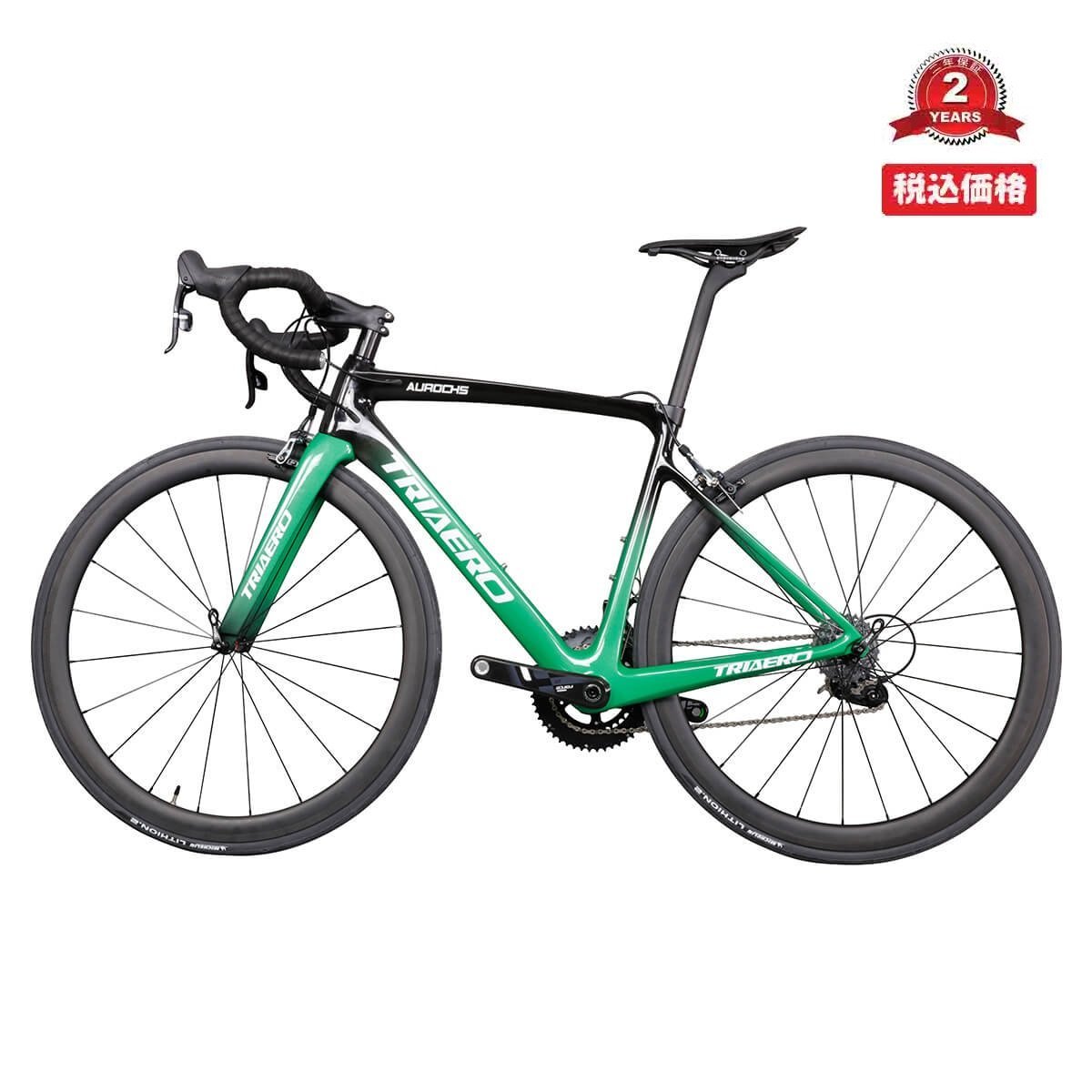
Looking at it this way, it becomes clear that the long-established Campagnolo laid many foundations, Shimano then took over with its excellent technical capabilities, and with the emergence of the newcomer SRAM, these three companies have contributed to the evolution of road bikes through their mutual technological innovations.
Currently, Shimano leads the industry, Campagnolo maintains its venerable presence by offering sophisticated, hobby-oriented, and distinctive products, and SRAM appears to specialize in even higher-end, avant-garde, and unique product development.
Each company also has its own unique stance on technological development.
While SRAM develops brilliant devices with flashes of genius, as shown with their wireless electrification, and then meticulously refines and perpetuates them, Shimano is a bit different.
As Shimano demonstrated with its disc brake development, it boldly incorporates new technologies into its products, leading the industry by making product leaps even if there's some lack of consistency, which is reassuring.
This is succinctly reflected in Shimano's "trickle-down technology."
This is a system where technologies from higher-grade models are progressively incorporated into lower-grade models with each model change.
In other words, a mechanism is in place to ensure that the latest technology is always available across all grades, supporting Shimano's strong brand image.
Let me also defend Campagnolo, which might be perceived as expensive but conservative and old-fashioned.
Campagnolo is still an indispensable presence in the racing world, and recently, it hasn't forgotten its pioneering spirit, being the first to achieve 12-speed rear gearing.
Of course, Shimano is not staying silent either.
I hear there's information that they've acquired a patent for 14-speed.
I'm looking forward to seeing what kind of product will come of it.

6 Finally
Sakai City in Osaka is famous as a bicycle town. It is home to a concentration of bicycle industries and is known for being the location of Shimano's headquarters. The bicycle museum there is a must-see spot for bicycle enthusiasts.
It displays a large number of bicycles from the dawn of cycling to the present day. As you view them in chronological order, the evolution of the bicycle unfolds before your eyes, endlessly fascinating.
Understanding history leads to a deeper understanding of the present.
Although this content may have been a bit dense, I hope it helped broaden your areas of interest.
Related article: Let's think about road bike safety