![AERO 40 Ⅱ ディスクブレーキホイール[リム内幅23mm] - ICANホイールジャパン](http://icanjp.com/cdn/shop/files/1_d90bc651-48bd-4f22-9e13-6d963c283ba6_1370x.jpg?v=1753869976)
![AERO 40 Ⅱ ディスクブレーキホイール[リム内幅23mm] - ICANホイールジャパン](http://icanjp.com/cdn/shop/files/2_37e9600e-9785-4d45-abe1-df49da71e7ee_1370x.jpg?v=1753869976)
![AERO 50 Ⅱ ディスクブレーキホイール[リム内幅23mm] - ICANホイールジャパン](http://icanjp.com/cdn/shop/files/ICANAERO50IIDiscWheels_1_1370x.jpg?v=1758088613)
![AERO 50 Ⅱ ディスクブレーキホイール[リム内幅23mm] - ICANホイールジャパン](http://icanjp.com/cdn/shop/files/ICAN_AERO_50_II_Disc_Wheels_2_1370x.jpg?v=1758088881)


![FL40Ⅱ ワイドリムロードカーボンホイール 軽量「内幅23mm] - ICANホイールジャパン](http://icanjp.com/cdn/shop/files/1_771b4686-2e73-4d35-b47c-b123b298f7f7_1370x.jpg?v=1755486826)
![FL40Ⅱ ワイドリムロードカーボンホイール 軽量「内幅23mm] - ICANホイールジャパン](http://icanjp.com/cdn/shop/files/2_76389d17-9f29-42af-aa59-a695414fcaf7_1370x.jpg?v=1755486826)
Cross Bike Basics: Practical Riding and Choosing Tips
Statistics show an increase in cycling due to the COVID-19 pandemic.
For the ICAN staff who love bicycles, it's great news that bikes are being used more for commuting and shopping.
And when the time comes to graduate from a "mamachari" (city bike) and consider a bike that's a bit more performance-oriented, the cross bike comes to mind.
These are quite enjoyable to ride.
This time, we will introduce practical ways to use and choose a cross bike.
1. The advantages of a cross bike
When you first switch to a serious bicycle like a cross bike, you'll likely be surprised at how easy and fast it is. And light, too. It's a moment when you feel the high quality.
You'll stop and admire your new bike, thinking, "That looks good."
Of course, mastering it requires a bit of skill at first.
You'll notice that the riding position is different from what you're used to.
When you pedal, your leg will straighten almost completely when it reaches the bottom of the stroke.
This allows the maximum power to be transferred to the bike.
To achieve this position, you'll raise the saddle, which means your feet will barely touch the ground when stopped.
You'll naturally get off the saddle, move your body forward, and straddle the frame while standing. One foot will remain on the pedal.
This is the standard practice for sports bikes, including road bikes.
Doesn't that look cool?
2. Using a cross bike in the city
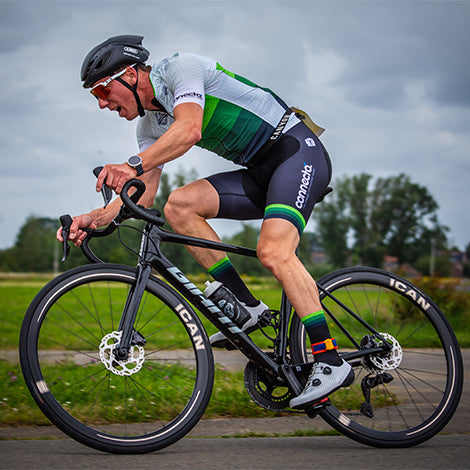
The theme of this article is "Is a cross bike practical?"
Let me state the conclusion first.
Yes, it is practical.
It's like driving a sports car to go shopping or commute.
It's a secret pleasure known only to those who do it. It's a world of practicality plus something extra.
If you buy a cross bike, add parts to use it in the city.
A kickstand is convenient. If you want a stylish look, a center stand is recommended, though it takes a little getting used to.
Lights and bells are often not included, and these are essential accessories.
If you plan to ride in the rain, mudguards for the tires would be beneficial.
If you look around, you'll find subtly designed mudguards that don't detract from the bike's appearance.
Care must be taken to protect against rust when exposed to the elements. In this regard, "mamachari" bikes are superior. We recommend storing your bike in a covered area whenever possible.
3. Budget and how to choose

Generally, cross bikes have a core price range of 50,000 to 100,000 yen.
Within this class, you're likely to be satisfied with any model you choose.
Incidentally, cross bikes originally possessed characteristics midway between road bikes and mountain bikes (MTBs). They are designed with an all-around character, emphasizing practicality.
Even within the category of cross bikes, there's a difference between those that lean more towards road bikes and those that lean more towards MTBs. A simple way to tell them apart is to look at the tires.
Thinner tires suggest a road-oriented bike, while thicker tires indicate an MTB-oriented bike designed for rougher terrain.
While it's a fun process to browse catalogs, magazines, and stores to find your perfect bike, you generally can't go wrong by choosing based on appearance. As you consider various color schemes and proportions, your eye will become more discerning, and you'll develop your own criteria for judgment.
4. Components that make up a cross bike
In this chapter, we'll delve into some more specialized topics, which should be helpful for understanding bicycles.
① Frame

Currently, there are three main materials for bicycle frames.
Steel (high-tensile steel or chromoly steel), aluminum, and carbon.
Steel and aluminum are the most common materials used for cross bikes.
Rather than one being inherently better, they offer different riding characteristics. Steel is generally said to be a bit heavier but more flexible and comfortable to ride, while aluminum is lightweight and offers stiff performance.
Frames come in several sizes, allowing you to choose one that fits your height.
The frame is a major factor in determining the total weight of a complete bicycle, but for cross bikes, a typical weight is around 11-12 kg.
② Tires and Wheels

The 700C standard for tire diameter is dominant, and for smaller riders, there's also a slightly smaller 650C size.
Tire widths vary from 25C to 45C (width expressed in millimeters), but 28C to 32C are the most common.
It's also a good idea to have a pump with a gauge. The specified tire pressure is indicated on the side of the tire.
Many cross bikes use French valves (Presta valves) for inflation, which are different from the British valves found on "mamachari" bikes, so be aware of this difference.
③ Derailleurs
As you know, the reason for having derailleurs is to maintain a consistent cadence and power output as much as possible. They enable efficient and effortless riding.
Currently, the number of front gears (the large gears attached to the pedals) ranges from one to three.
More isn't always better; two gears are recommended for city riding, and this is becoming a trend.
④ Brakes
Cross bikes primarily use two types of brakes: V-brakes, which attach to the rim, and disc brakes, which have become more common recently.
Disc brakes are renowned for their stopping power, but traditional V-brakes also offer good performance and are perfectly adequate for practical use.
Disc-equipped models are said to be about 10,000 yen more expensive, so if cost-effectiveness is a priority, you can't go wrong with V-brakes.
⑤ Handlebars
Straight handlebars are the mainstream for cross bikes, but a slightly curved type is more comfortable for the arms than a completely straight one, and therefore recommended.
The brake levers are shorter because it's standard practice to use two or three fingers on the lever.

5. Insurance and theft
For bicycles costing over 50,000 yen, theft is a concern. Even more so if you use it for practical purposes.
It's essential to use a sturdy chain lock and, if possible, secure it to a fixed object on the ground. However, it's also worth considering insurance in case of an unfortunate event.
With monthly fees starting from around 500 yen, about the cost of a single cup of coffee, buying peace of mind might be well worth it.
6. If you want to customize your bike
I've already mentioned mudguards, but if you cut down existing ones to the absolute minimum, you can create a very stylish bike. This is a recommended hack for those who enjoy DIY projects.
The most effective way to improve bike performance and reduce weight is to replace the wheels.
At ICAN, we have the best solution for that.
Please check it out on our website.
7. Summary
For us ICAN staff, cross bikes are indispensable for city riding, even outside of touring. Of course, if the mood strikes, they are perfectly suitable for a short excursion as well.
It brings us great joy when people discover the pleasure of cycling through cross bikes, starting with city riding.
ICAN is always here to support you.
[Reference Article]
"Sports Bicycle: An Introduction"