![AERO 40 Ⅱ ディスクブレーキホイール[リム内幅23mm] - ICANホイールジャパン](http://icanjp.com/cdn/shop/files/1_d90bc651-48bd-4f22-9e13-6d963c283ba6_1370x.jpg?v=1753869976)
![AERO 40 Ⅱ ディスクブレーキホイール[リム内幅23mm] - ICANホイールジャパン](http://icanjp.com/cdn/shop/files/2_37e9600e-9785-4d45-abe1-df49da71e7ee_1370x.jpg?v=1753869976)
![AERO 50 Ⅱ ディスクブレーキホイール[リム内幅23mm] - ICANホイールジャパン](http://icanjp.com/cdn/shop/files/ICANAERO50IIDiscWheels_1_1370x.jpg?v=1758088613)
![AERO 50 Ⅱ ディスクブレーキホイール[リム内幅23mm] - ICANホイールジャパン](http://icanjp.com/cdn/shop/files/ICAN_AERO_50_II_Disc_Wheels_2_1370x.jpg?v=1758088881)


![FL40Ⅱ ワイドリムロードカーボンホイール 軽量「内幅23mm] - ICANホイールジャパン](http://icanjp.com/cdn/shop/files/1_771b4686-2e73-4d35-b47c-b123b298f7f7_1370x.jpg?v=1755486826)
![FL40Ⅱ ワイドリムロードカーボンホイール 軽量「内幅23mm] - ICANホイールジャパン](http://icanjp.com/cdn/shop/files/2_76389d17-9f29-42af-aa59-a695414fcaf7_1370x.jpg?v=1755486826)
Why are road bike frames diamond-shaped?
In all industrial design, truly innovative transformations are rare.
A rare example might be the transition from mobile phones to smartphones, but setting that aside, has there ever been a revolutionary change in road bike design?
Unfortunately, with the exception of very early models, road bike design has not changed significantly.
Why is this the case? I would like to examine this from various perspectives and consider current frame trends.
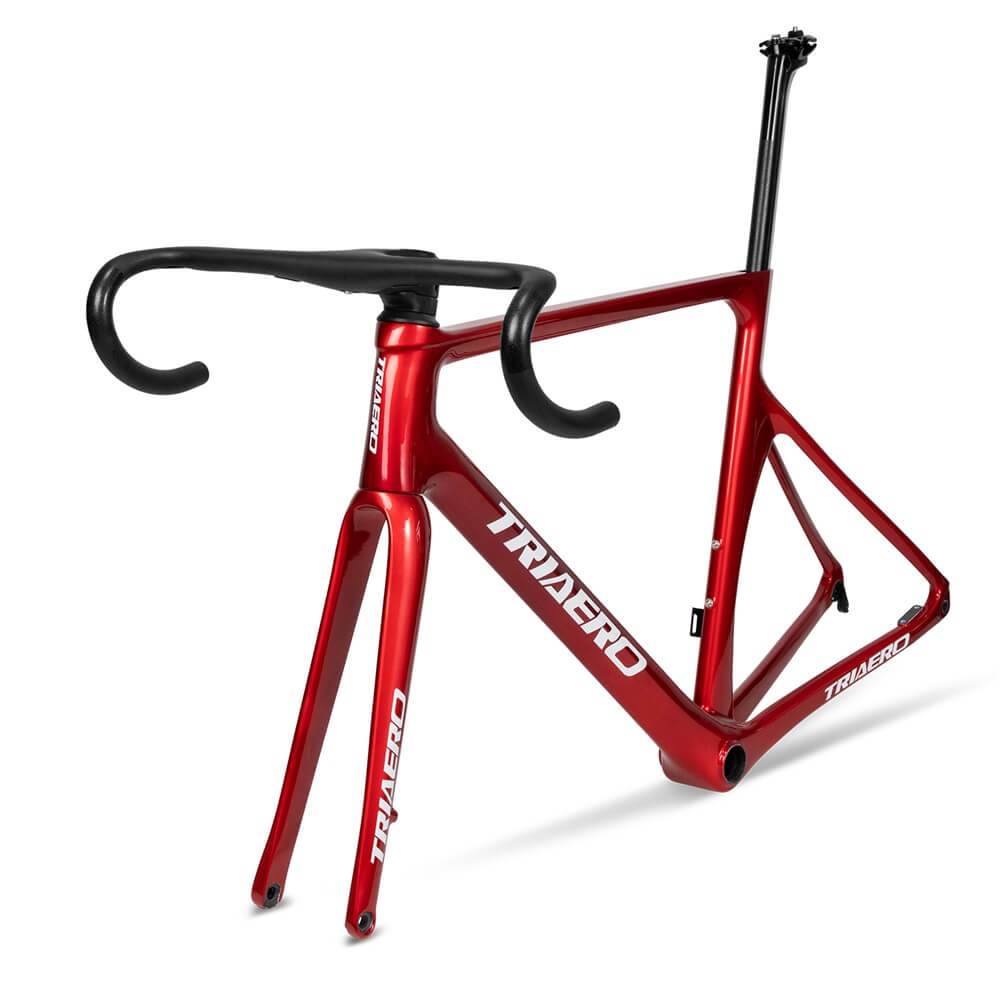
1. Road bike frames often share similar shapes
The shift in frame materials from chromoly to aluminum and carbon has greatly expanded the possibilities for frame shapes. Carbon, in particular, allows for flexible shaping and offers complete freedom in terms of strength, stiffness, elasticity, and toughness.
However, road bike frames are still predominantly diamond-shaped. You rarely see structures that use materials in outrageous ways or designs that are startlingly unconventional.
Why is that?
2. The existence of the UCI
The UCI (Union Cycliste Internationale) governs global cycling races and has a significant influence on bicycle products in general, not just racing. The well-known 6.8kg minimum weight rule is one example, but there are actually detailed regulations regarding frame shapes as well.
For instance, there used to be a 3:1 ratio rule, which stipulated that the aspect ratio of frame tubes could not exceed 3:1. Although this has since been replaced by a rule stating that it must "fit within an 8cm box," the practical effect remains the same.
Furthermore, a regulation was added regarding frame shapes, stating that "frames of unusual shapes (other than the diamond shape) shall not be used." It is believed that the purpose of this was to eliminate unfairness in races caused by technological disparities between manufacturers.
As long as road bikes are designed for racing (or aspire to racing), UCI regulations cannot be ignored.
This, then, provides one, but significant, answer to the question, "Why are road bike frames diamond-shaped?"
[Reference article: What you should know about the UCI]
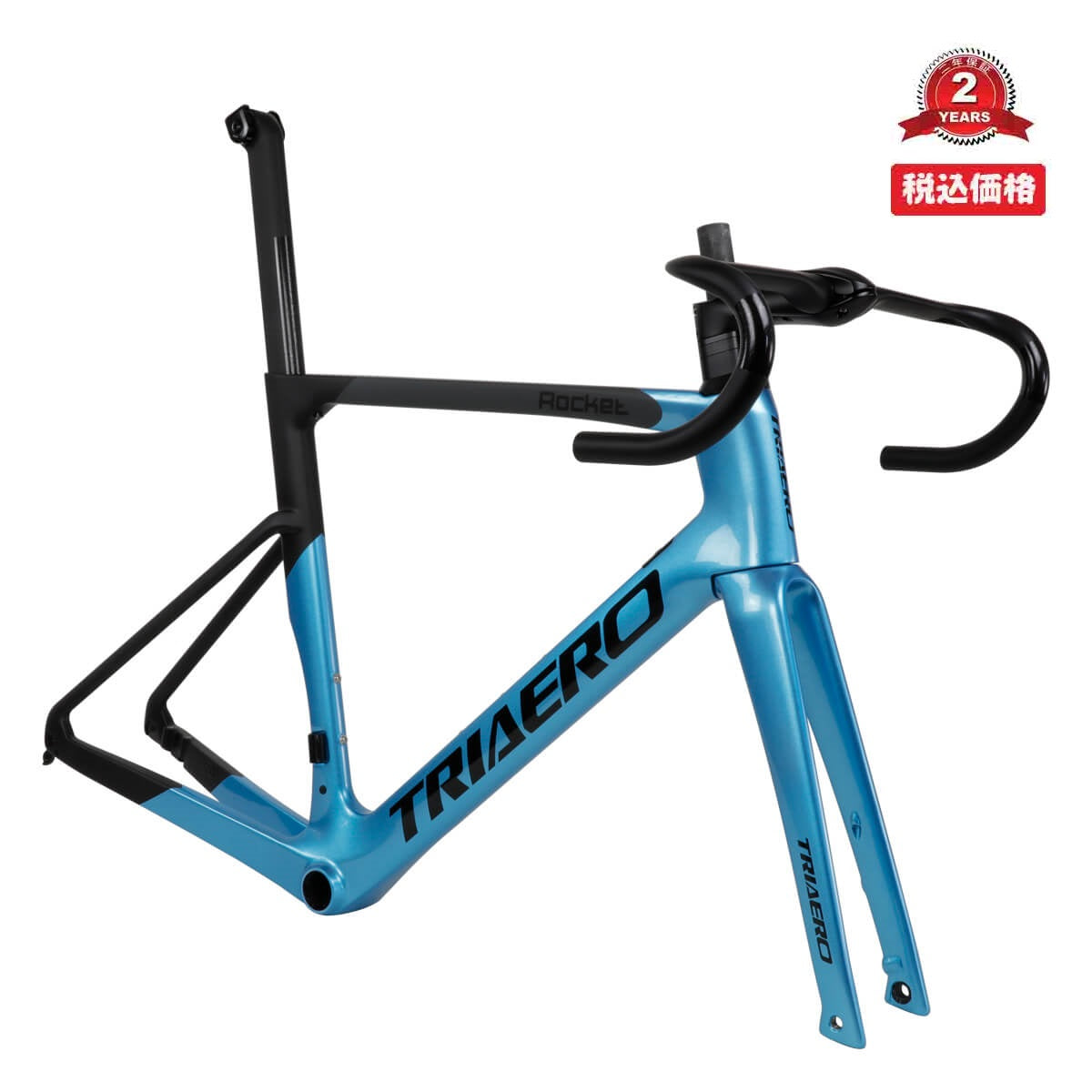
3. Modern road bike frame shapes
In addition to UCI rules, practical considerations explain why the diamond frame has become the standard.
The reason is that arranging tubes in a triangle is a golden shape, an essential form for high strength and light weight. Furthermore, the ease of adjustment for the rider was a significant advantage that cannot be overlooked.
By the way, if we were to categorize modern road bike frames, two main trends can be identified:
① Road, Gravel, Cyclocross, and Aero
The majority of road bikes designed for UCI races fall into this category. While there are some differences in shape depending on the material, they do not significantly alter the traditional image. Even aero bikes retain the basic diamond shape. Their characteristic is bold aerodynamic design for frame and cross-sectional shapes, while adhering to UCI rules.
② Triathlon bikes
Since triathlon races are not governed by the UCI, the time trial (TT) bikes used in them often feature quite daring shapes. Some even lack seat tubes or seat stays, appearing fresh and novel to eyes accustomed to the standard diamond shape.
Thanks to recent technological advancements, it appears to be a clear fact that it is possible to build faster frames (albeit with conditions such as increased weight) without being constrained by the diamond shape.
So, what are the latest trends for road bikes that still adhere to the diamond shape? This seems to be largely related to the evolution of carbon technology, which has allowed for greater design freedom. This has led to the "mega-tubing" trend.

4. Mega-tubing
Which part of the frame do you think bears the most force from the entire bicycle?
The correct answer, as you know, is the downtube.
Looking at recent road bikes, it's clear that the thickness of the downtube is incomparable to conventional ones. This idea of making it thick but with thin walls is what "mega-tubing" is all about.
In response, the head tube, bottom bracket area, chainstays, and front fork have also become thicker, while the top tube and seatstays have become elegantly thin, forming a supple shock-absorbing structure.
This distinct structural design also positively impacts aesthetics, successfully creating a beautiful and seemingly fast appearance.
5. Horizontal frames vs. sloping frames
In the past, chromoly frames had a top tube that was "horizontal," meaning it remained parallel to the ground. The beauty of these horizontal frames transcends logic, and they still have many admirers today. However, setting that aside, the mainstream frame design has shifted from horizontal to sloping. Even among chromoly frames designed for enthusiasts, sloping frames are now commonplace.
Inspired by mountain bikes, the adoption of sloping frames allows for more compact frame construction, leading to weight reduction and increased rigidity. Furthermore, sloping frames offer a greater range of seatpost adjustment, enabling a smaller variety of frame sizes to cover a wider range of body types.
This concept of a "smaller triangle" through sloping is also reflected in the rear triangle (seat tube + seat stay + chain stay). By lowering the junction of the seat stay and seat tube, the rear triangle can be made smaller, which is expected to increase rigidity. What shape is your road bike?

6. Wheelbase
Regarding the wheelbase, which represents the distance between the front and rear axles, it has traditionally been a consistent design policy for on-road road bikes to make it as short as possible. Road bike tires are so close to the front triangle of the frame that they almost seem to be tucked into both the front and rear. The basic idea is that this configuration offers advantages in terms of weight and rigidity.
However, contrary to the quick handling gained from a shorter wheelbase, a longer wheelbase increases riding stability. The challenge for frame manufacturers lies in how skillfully they can balance these aspects in the design of each component.
Incidentally, for MTBs, cyclocross, and gravel bikes, the chainstays are elongated and the front fork is raked back to create a longer wheelbase, ensuring stability on trails. While bicycles may appear to be simple structures, this is a moment when you realize their profound depth.
7. Front fork
With the advent of disc brakes as the mainstream, changes in braking behavior have driven the evolution of frame design, especially the front fork. Carbonization of front forks has already progressed further than that of main frames. The reasons for this are believed to include not only weight reduction but also the freedom to design for strength and easier adaptation to component advancements. Of course, design flexibility is also an undeniable advantage.

Finally
I hope I've managed to convey some of the profound depth of road bike frames. I also hope you've realized how even slight differences in geometry can impact the riding feel.
Amateur cyclists rarely get the opportunity to compare many different types of bikes, making it difficult to notice differences in riding feel. Manufacturer-sponsored exhibition test rides in urban areas and test rides at specialty stores will be excellent opportunities to broaden your horizons as a cyclist.
ICAN supports such active cyclists. Ⓗ
[ICAN Official HP: ICAN Road Bike Frames ]