![AERO 40 Ⅱ ディスクブレーキホイール[リム内幅23mm] - ICANホイールジャパン](http://icanjp.com/cdn/shop/files/1_d90bc651-48bd-4f22-9e13-6d963c283ba6_1370x.jpg?v=1753869976)
![AERO 40 Ⅱ ディスクブレーキホイール[リム内幅23mm] - ICANホイールジャパン](http://icanjp.com/cdn/shop/files/2_37e9600e-9785-4d45-abe1-df49da71e7ee_1370x.jpg?v=1753869976)
![AERO 50 Ⅱ ディスクブレーキホイール[リム内幅23mm] - ICANホイールジャパン](http://icanjp.com/cdn/shop/files/ICANAERO50IIDiscWheels_1_1370x.jpg?v=1758088613)
![AERO 50 Ⅱ ディスクブレーキホイール[リム内幅23mm] - ICANホイールジャパン](http://icanjp.com/cdn/shop/files/ICAN_AERO_50_II_Disc_Wheels_2_1370x.jpg?v=1758088881)


![FL40Ⅱ ワイドリムロードカーボンホイール 軽量「内幅23mm] - ICANホイールジャパン](http://icanjp.com/cdn/shop/files/1_771b4686-2e73-4d35-b47c-b123b298f7f7_1370x.jpg?v=1755486826)
![FL40Ⅱ ワイドリムロードカーボンホイール 軽量「内幅23mm] - ICANホイールジャパン](http://icanjp.com/cdn/shop/files/2_76389d17-9f29-42af-aa59-a695414fcaf7_1370x.jpg?v=1755486826)
What are the advantages and disadvantages of carbon frames?
Until about a decade ago, carbon frame bicycles were considered ultra-luxury items.
Today, however, carbon has become an essential material for high-end bicycles.
Since it's a luxury item, it's worth understanding its characteristics to take good care of it.
This time, we'll be talking about carbon.
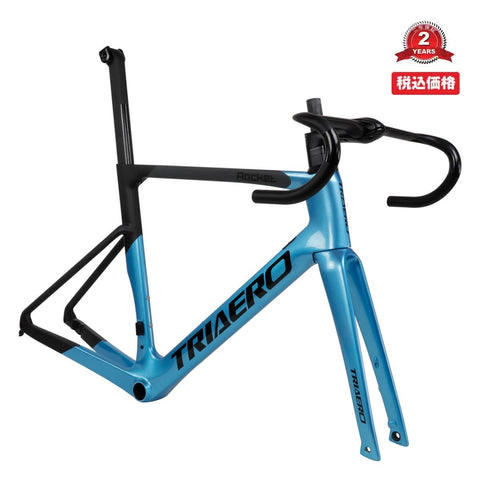
What exactly is carbon?
While carbon is a material we hear about more often now, it's fair to say that many people still aren't very familiar with it.
Initially, it was used in artificial satellites and wind turbine blades, but in recent years, it has become a highly versatile material used in bicycles, golf clubs, fishing rods, tennis rackets, and even aircraft.
Speaking of aircraft, the Boeing 787, the successor to the famous 777 (Triple Seven), uses 50% carbon in its construction.
While the 777 used only about 10% carbon, its strength and lightness were highly rated, leading to a 50% increase in the 787. Fuel efficiency reportedly improved by 20%.
With technological advancements, carbon has also found its way into bicycles, and advanced road bikes are now made of carbon material.
Previously, carbon was considered a next-generation material that was out of reach, but in recent years, it has become somewhat more accessible.
However, it's still difficult to call it cheap.
Therefore, since you've gone to the trouble of buying one, you'll want to use it carefully for a long time.
However, carbon alone isn't particularly strong.
The carbon used in bicycles and other products, as the name "carbon fiber" suggests, is a composite material called CFRP (Carbon Fiber Reinforced Plastics), created by layering and baking sheets woven from carbon fibers.
CFRP is an ideal material for bicycles because it is lightweight, highly rigid, and strong.
Nevertheless, carbon can have only about half the strength depending on the weaving direction, so precise design is required according to its intended use and shape.
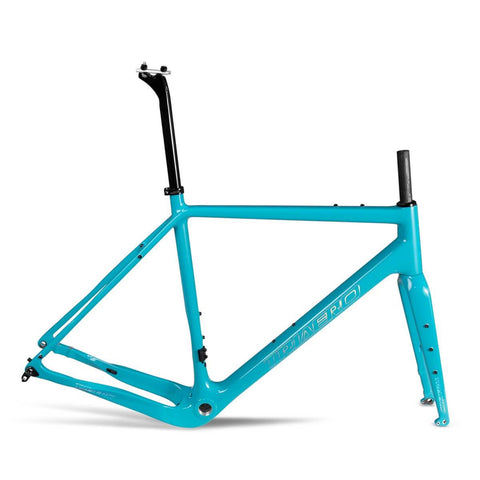
Advantages of Carbon
Here are the advantages of carbon.
While there are countless benefits, the most striking feature is its "lightness."
It is highly rigid, strong, and flexible.
Its specific strength is about 10 times that of iron, and its elastic modulus is 7 times that of iron.
It can be formed into any shape.
It's a rare material that is "light," "strong," and "flexible."
With common materials, being hard often means they become brittle, a property known as toughness.
Imagine a Japanese sword.
You don't typically imagine it bending; rather, if a certain amount of stress is applied, it breaks suddenly, doesn't it?
While you rarely get to see a Japanese sword break in reality, high toughness can result in such behavior.
On the other hand, wire, though also iron, bends easily, doesn't it?
It bends rather than breaks.
Just as different types of iron have different properties, carbon, even though it's a resin, is completely different from plastic models.
Carbon is an ideal material that is strong, light, and has a certain degree of flexibility.
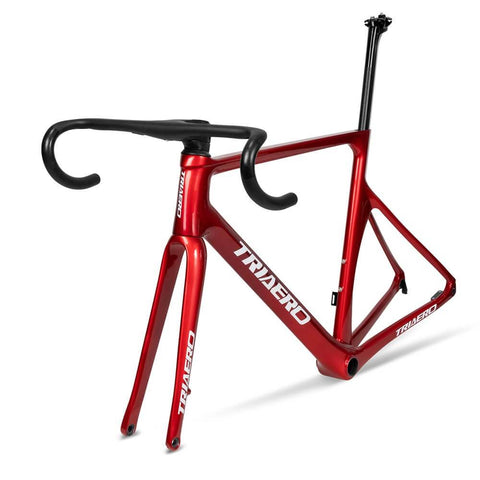
Disadvantages of Carbon
It's not all good news.
Carbon also has disadvantages that could be considered weaknesses.
Weak against forces from unexpected directions.
Brittle fracture occurs.
Delamination occurs.
While "weak against forces from unexpected directions" is easy to understand, the other terms are complex, and there aren't many websites that explain them in an easy-to-understand way.
First, "brittleness" means "the quality of being brittle."
Iron has a property where it becomes brittle when it contains hydrogen.
This is a topic of university research, something people are trying to avoid.
Carbon also exhibits brittleness, where the material itself can become brittle, irrespective of external forces, leading to a decrease from its original strength.
While brittleness in resin was caused by UV radiation, carbon is relatively resistant to UV rays.
Nevertheless, brittleness can occur under various conditions.
Next is "delamination."
Imagine a hamburger for this.
It has layers: "bun - patty - bun."
Between these layers, there's ketchup and mayonnaise, and juice from the patty, which makes it less likely to fall apart.
However, if there were no ketchup or meat juices, it would likely fall apart when picked up, wouldn't it?
In the case of layered carbon, it's difficult to know what's happening within those layers without special methods.
If a shape is made from poor quality carbon, the layers can separate, leading to a decrease in strength.
This is professionally referred to as "delamination."
If we were to explain it in technical terms, it would be much more complex and deep enough to fill an entire book, but for now, a general understanding is sufficient, so please be aware that it has such weaknesses.
"Weak against forces from unexpected directions" affects how you ride daily.
For "brittleness," daily riding habits and maintenance are crucial.
"Delamination" is influenced by manufacturing issues and the operating environment, so at the very least, purchase from a reputable manufacturer and a trustworthy store.
As a rule of thumb, buy products from manufacturers with a long history.
You wouldn't want to buy from a bad manufacturer again, and such products quickly disappear from the market.
On the other hand,ICAN has been in business since 2009, making it a trustworthy manufacturer and store.
Their materials are Japanese-made, which also instills confidence.
In summary, purchasing products from a reputable manufacturer and your daily riding habits significantly impact the product.
We will share specific precautions in our next update.