![AERO 40 Ⅱ ディスクブレーキホイール[リム内幅23mm] - ICANホイールジャパン](http://icanjp.com/cdn/shop/files/1_d90bc651-48bd-4f22-9e13-6d963c283ba6_1370x.jpg?v=1753869976)
![AERO 40 Ⅱ ディスクブレーキホイール[リム内幅23mm] - ICANホイールジャパン](http://icanjp.com/cdn/shop/files/2_37e9600e-9785-4d45-abe1-df49da71e7ee_1370x.jpg?v=1753869976)
![AERO 50 Ⅱ ディスクブレーキホイール[リム内幅23mm] - ICANホイールジャパン](http://icanjp.com/cdn/shop/files/ICANAERO50IIDiscWheels_1_1370x.jpg?v=1758088613)
![AERO 50 Ⅱ ディスクブレーキホイール[リム内幅23mm] - ICANホイールジャパン](http://icanjp.com/cdn/shop/files/ICAN_AERO_50_II_Disc_Wheels_2_1370x.jpg?v=1758088881)


![FL40Ⅱ ワイドリムロードカーボンホイール 軽量「内幅23mm] - ICANホイールジャパン](http://icanjp.com/cdn/shop/files/1_771b4686-2e73-4d35-b47c-b123b298f7f7_1370x.jpg?v=1755486826)
![FL40Ⅱ ワイドリムロードカーボンホイール 軽量「内幅23mm] - ICANホイールジャパン](http://icanjp.com/cdn/shop/files/2_76389d17-9f29-42af-aa59-a695414fcaf7_1370x.jpg?v=1755486826)
What a mountain bike wheel replacement entails
As mountain bikes (MTBs) are built for heavy-duty use, their wheels are also subjected to harsh environments.
There are three main reasons to consider replacing your MTB wheels:
① You want to improve performance or change the size.
② Your current wheels are damaged.
③ You want to have several sets for different riding conditions.
This time, we will discuss these points.
About MTB Wheel Sizes
① Rim Diameter

First, let's talk about rim diameter.
As you know, MTB wheel outer diameters primarily come in three sizes: 26-inch, 27.5-inch, and 29-inch.
When MTBs first appeared in the 1970s, they used 26-inch wheels.
In the 2000s, 29-inch wheels began to be used, mainly for racing.
The advantages of 29-inch wheels included their ability to handle uneven surfaces, their stability at speed, and their larger contact patch for better grip.
On the other hand, their drawbacks included increased weight and difficulty for shorter riders to handle.
In 2013, 27.5-inch wheels were introduced.
This size was a compromise between 26 and 29 inches, combining the best features of both.
Currently, the mainstream sizes are narrowing down to 27.5 and 29, with 29-inch wheels being particularly prominent in serious races.
[Reference]
Converting rim diameters to millimeters:
26 inches → 559 mm
27.5 inches → 584 mm
29 inches → 622 mm
As you can see, 26 and 27.5 inches are quite close in diameter.
Furthermore, MTB wheel sizes also differ in rim width and hub width.
② Rim Width

Rim widths can be selected within a range of about 23.5 to 40 mm.
The choice depends on the tire width. For cross-country and trail riding, narrower, lighter rims are used to prioritize speed, while for downhill and enduro, wider rims are used to prioritize stability.
③ Hub Width

Hub width refers to the Boost standard, which changed in 2015. Previously, it was 142 mm for the rear and 100 mm for the front, but it became 148 mm for the rear and 110 mm for the front. Many new models are now adopting this new standard.
Changing MTB Wheel Size
① Changing Diameter
It may be possible to change a 26-inch wheel to a 27.5-inch wheel in many cases.
If there is enough clearance in the frame's wheel housing and the bike has disc brakes, this is worth considering.
Upgrading from 26 to 27.5 inches can improve high-speed cruising performance and stability.
② Changing Rim Width
This modification involves widening the rim to accommodate wider tires. Again, it's easier to do this with disc brakes.
A major advantage of wider tires is that they allow for lower tire pressure.
They also reduce tire twist and rim bead unseating.
This can improve traction and stability in demanding conditions like downhill and enduro riding.
③ Changing Hub Width
By changing the hub's Boost standard from the traditional 142 mm rear/100 mm front to the new 148 mm rear/110 mm front, you can expect improved stability and rigidity.
Changing to the new standard is possible on most MTBs.
Want to Improve Performance?
For MTBs, weight reduction is effective, especially for improving climbing performance.
While aluminum wheels have been widely used due to their safe strength, advancements in carbon wheel technology have led to products that offer both strength and lightweight properties.
One indicator of a wheel's reliability is the length of its warranty period. Additionally, whether the manufacturer also produces high-quality MTB frames or complete bikes can be a helpful guide.
Furthermore, by preparing multiple wheel/tire sets to change tire width and tread patterns according to the competition genre, it is possible to optimize a single bike for that specific competition.
ICAN MTB Wheels
ICAN has been an early adopter of carbon MTB wheels, accumulating technology based on feedback from races.
We have already achieved a high level of balance between lightweight design and durability.
As a testament to this confidence, ICAN offers a 3-year long-term warranty on its MTB wheels.
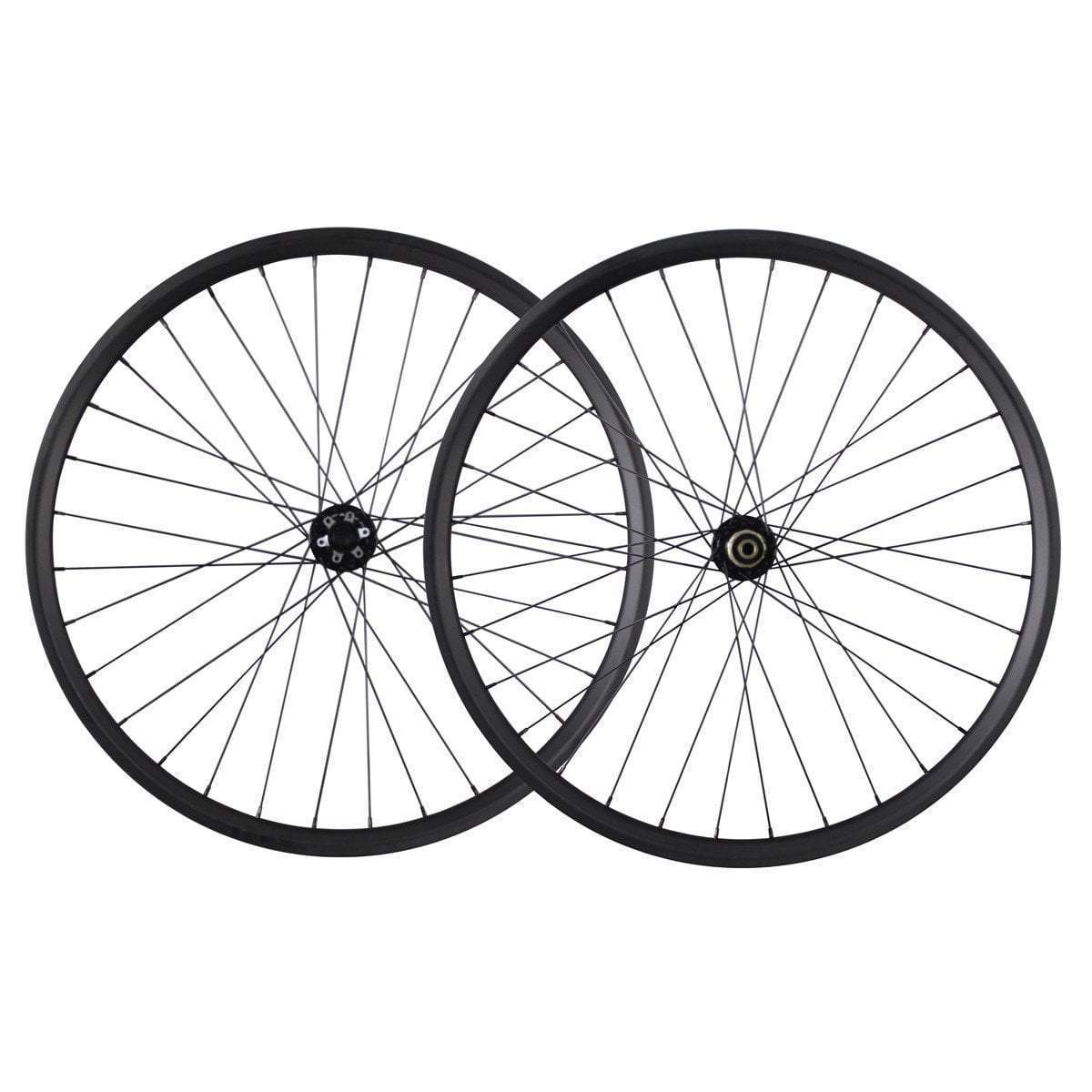
【ICAN MTB Wheels Official Website】
Summary
The racing world drives the MTB industry, just as it does for road bikes.
Among them, the MTB world is arguably the most rapidly evolving.
From cross-country, enduro, and downhill to various tricks, including dirt jumping. More advanced course designs and techniques constantly provide feedback to the production process. Of course, MTBs are also eye-catching as stylish bicycles for urban riding.
In this way, MTBs are becoming an unmissable presence in Japan.
We at ICAN are also committed to technological development to support the evolution of MTBs.
Don't forget to follow ICAN!