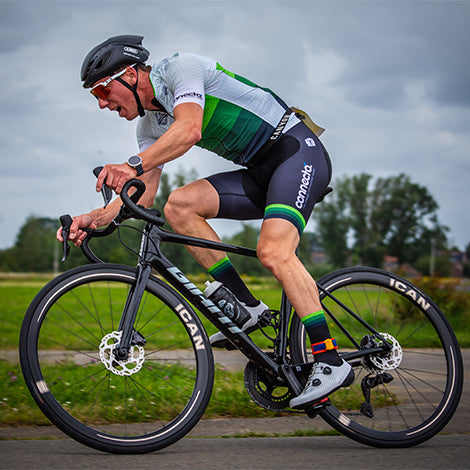
![AERO 40 Ⅱ ディスクブレーキホイール[リム内幅23mm] - ICANホイールジャパン](http://icanjp.com/cdn/shop/files/1_d90bc651-48bd-4f22-9e13-6d963c283ba6_1370x.jpg?v=1753869976)
![AERO 40 Ⅱ ディスクブレーキホイール[リム内幅23mm] - ICANホイールジャパン](http://icanjp.com/cdn/shop/files/2_37e9600e-9785-4d45-abe1-df49da71e7ee_1370x.jpg?v=1753869976)
![AERO 50 Ⅱ ディスクブレーキホイール[リム内幅23mm] - ICANホイールジャパン](http://icanjp.com/cdn/shop/files/ICANAERO50IIDiscWheels_1_1370x.jpg?v=1758088613)
![AERO 50 Ⅱ ディスクブレーキホイール[リム内幅23mm] - ICANホイールジャパン](http://icanjp.com/cdn/shop/files/ICAN_AERO_50_II_Disc_Wheels_2_1370x.jpg?v=1758088881)


![FL40Ⅱ ワイドリムロードカーボンホイール 軽量「内幅23mm] - ICANホイールジャパン](http://icanjp.com/cdn/shop/files/1_771b4686-2e73-4d35-b47c-b123b298f7f7_1370x.jpg?v=1755486826)
![FL40Ⅱ ワイドリムロードカーボンホイール 軽量「内幅23mm] - ICANホイールジャパン](http://icanjp.com/cdn/shop/files/2_76389d17-9f29-42af-aa59-a695414fcaf7_1370x.jpg?v=1755486826)
5 Reasons Why a Mountain Bike is Recommended for Commuting
If you're thinking of starting to commute by bike, what kind of bike would you choose?
Would it be the shape, the color, or the price?
On this page, we'll tell you the best type to choose and how much you should spend, so be sure to check it out.
We hope you find it helpful.
■Mountain Bike Tires are Best

Each type of bicycle has its own suitable tires.
Road bikes have surprisingly thin tires.
Conversely, mountain bikes have thicker tires.
For beginners who want to use a bicycle for commuting, we recommend a mountain bike.
When commuting by bike, you may need to ride over gutters.
If you're riding on asphalt, a lightweight road bike might be good.
However, gutters can be surprisingly uneven, and if an amateur rides a road bike over them, important and expensive parts like the rims can be damaged relatively quickly, leading to significant trouble later on.
In contrast, mountain bikes have wide tires and are originally designed for rough terrain, so gutters are an easy task for them.
They require very little maintenance; wiping them down about once a month with a dry cloth or rag will keep them looking good.
■Healthy Exercise

When it comes to exercise, walking is popular, but if you actually try it, you'll quickly get bored.
That's because the distance you can walk is limited, and so are the paths.
Familiar scenery quickly becomes boring scenery.
In contrast, with a bicycle, you can easily ride about 5km, and once you get a little used to it, you can even ride about 10km.
You can enjoy various different sceneries.
Riding a bicycle for about 30 minutes burns approximately 200 kcal.
If you switch to cycling for your commute, you'll be exercising for an hour a day (round trip), burning 400 to 500 kcal.
Even if it doesn't seem like much day-to-day, you can expect results by continuing for a month, three months, and so on.
Overly strenuous exercise doesn't last, but commuting is daily.
Just by changing your mindset a little, you can incorporate healthy exercise into your routine.
■New Discoveries

When commuting by bus or train, it's enjoyable because you can watch videos during your journey.
However, you don't pay attention to the surrounding scenery.
On the other hand, when commuting by mountain bike, you ride while looking at the road and the scenery.
You might rush on the way there, but on the way back, you'll likely have a bit more peace of mind.
You can stop by that computer shop you were curious about, or a bookstore, or places that would be too much trouble to visit if you were commuting by bus or train.
Also, it's hard to describe, but it's a little bit pleasant to make small discoveries like narrow roads or small parks that you wouldn't have noticed when driving a car, isn't it?
■Saves Money Too

One concern with mountain bike commuting is the initial cost.
These days, some supermarkets even sell bicycles, and you can get a city bike (a typical "mamachari") for as little as 5,000 yen.
But wait a minute.
Commuting is a daily activity, so think about it for a moment.
Switching your commute to a bicycle means that on days you cycle to work, your transportation costs are 0 yen.
On rainy days, you might take the bus or train, so consider canceling your commuter pass and getting a transportation IC card like SUICA.
For example, if you spend 20,000 yen on transportation each month, switching to bike commuting could reduce that to 0 to 3,000 yen.
Even considering just one month, the difference is over 15,000 yen.
That's why I recommend spending a little more on a slightly better mountain bike for your daily commute.
First, you'll grow fond of it.
And there's a reason why expensive mountain bikes are expensive, and cheap mamacharis are cheap.
If you assume the saved commuting expenses are 20,000 yen per month, you can save approximately 200,000 yen per year.
A mountain bike won't become unusable in one year, so if you use it for 5 years, you'll have saved 1,000,000 yen.
Even if you buy a bicycle that costs not half, but 30 to 40 percent of that amount, you won't be hurting your wallet.
It would be a good idea to use a credit card's installment payment feature.
Riding a cheap, low-quality bicycle every day can lead to back or leg pain.
Since you'll be riding it daily, I think it's better to choose something a little more carefully.
■Infection Control

During the COVID-19 pandemic, avoiding crowds is essential.
Trains and buses inevitably become crowded.
Bicycle commuting offers various options.
You can choose a wide road, even if there's a lot of traffic, or ride down a back street with fewer people and cars.
There's also the argument that you're not in a crowded situation when you're outdoors anyway, so bicycle commuting might be the best way to prevent the spread of COVID-19.
〇Points to Note
There are some things to be careful about when commuting by bike.
Nevertheless, there's no need to be afraid.
If you know about them beforehand and take precautions, it's nothing to worry about.
■Will workers' compensation be properly paid in the event of an accident?
The only thing to fear when cycling is an accident.
Unfortunately, some cyclists ride against traffic without hesitation, so you might get into a collision.
Also, the other party might be a car.
If you have an accident during your commute, you've probably reported your commuting route to your company.
Many people believe that if they have an accident using a different commuting method, workers' compensation will not be paid.
Workers' compensation decisions are made by the Labor Standards Inspection Office, not the company, and the Labor Standards Inspection Office states that "if there is a reasonable reason, an accident on a commuting method other than the one reported to the company can still be covered by workers' compensation."
For example, if you normally take the train but drove to work because you were going to be late, or if you normally commute by bike but took the train because you had a flat tire.
Since only you know your true regular commuting route, there's a high possibility that you can file a claim.
The interpretation of the Labor Standards Inspection Office's decisions may vary slightly by prefecture.
If you're concerned, it's reassuring to inquire by phone or email in advance.
In some cases, even within the same office, different staff members may have different interpretations.
You can inquire anonymously, so there's no need to worry about anything strange.
■It's better to take UV protection measures
If you're commuting by bike, you'll likely be riding your mountain bike in the morning.
It might be dark on your way home, but depending on the season, it might still be bright.
If you don't take UV protection measures, you'll get sunburned.
Sunburn alone might be okay, but it can lead to sunspots.
There are shirts that repel UV rays, and there are also arm sleeves for protection.
Until recently, there were only white and black options, but now there are many fashionable choices, so you can enjoy your original style even here.
■Protect your eyes with goggles
Goggles are also a good idea.
If you wear glasses, you might not need them, but when riding a bike, dust and insects can fly into your eyes.
Insects can also fly into your mouth, but since you're probably wearing a mask these days, that shouldn't be a problem.
If an insect gets in your eye, it can be itchy or painful, which is a nuisance, and even after washing it out, you might still feel discomfort or itchiness, making for an unpleasant experience.
Even an inexpensive pair of sunglasses or goggles will provide peace of mind.
Many people riding road bikes in the city wear goggles, and it turns out they're not just for looking cool.
While eye protection is the main purpose, they also guard against insects and UV rays.
■Summary

Let's switch your commute to a bicycle.
In that case, a mountain bike is recommended due to its resilience against uneven roads and other obstacles.
Since you'll be using it for daily commuting, a slightly sturdier one is safer and more satisfying than a cheap one.
The transportation allowance from your company won't change, so you can acquire it without hurting your wallet.
You might discover cityscapes you never noticed on the train or bus, and make invaluable and enjoyable discoveries.