![AERO 40 Ⅱ ディスクブレーキホイール[リム内幅23mm] - ICANホイールジャパン](http://icanjp.com/cdn/shop/files/1_d90bc651-48bd-4f22-9e13-6d963c283ba6_1370x.jpg?v=1753869976)
![AERO 40 Ⅱ ディスクブレーキホイール[リム内幅23mm] - ICANホイールジャパン](http://icanjp.com/cdn/shop/files/2_37e9600e-9785-4d45-abe1-df49da71e7ee_1370x.jpg?v=1753869976)
![AERO 50 Ⅱ ディスクブレーキホイール[リム内幅23mm] - ICANホイールジャパン](http://icanjp.com/cdn/shop/files/ICANAERO50IIDiscWheels_1_1370x.jpg?v=1758088613)
![AERO 50 Ⅱ ディスクブレーキホイール[リム内幅23mm] - ICANホイールジャパン](http://icanjp.com/cdn/shop/files/ICAN_AERO_50_II_Disc_Wheels_2_1370x.jpg?v=1758088881)


![FL40Ⅱ ワイドリムロードカーボンホイール 軽量「内幅23mm] - ICANホイールジャパン](http://icanjp.com/cdn/shop/files/1_771b4686-2e73-4d35-b47c-b123b298f7f7_1370x.jpg?v=1755486826)
![FL40Ⅱ ワイドリムロードカーボンホイール 軽量「内幅23mm] - ICANホイールジャパン](http://icanjp.com/cdn/shop/files/2_76389d17-9f29-42af-aa59-a695414fcaf7_1370x.jpg?v=1755486826)
Maintenance methods when a bicycle gets wet in the rain
In August 2021, heavy rains hit mainly western Japan.
Some areas were submerged, and we extend our deepest sympathies to those affected and to those who lost their lives.
The most we can do in this publication is to provide information on how to restore and maintain bicycles that have been wet or submerged due to rain.
This is useful information that you can use in your daily life, so please take a moment to read it.
Damage to bicycles when wet
First, let's learn what happens to each material if you do nothing after a bicycle is submerged or gets wet in the rain.
If you know what the "worst condition" is, you can take measures to prevent it.
Everyone wants their bicycle to be clean.
First, the "carbon" part is a water-resistant material.
Carbon is made of carbon and resin, so it hardly absorbs water.
Next is "aluminum."
Officially, it's aluminum.
It's a metal, but it's rust-resistant.
Even without surface treatment, an oxide film naturally forms on the surface, preventing rust.
The oxide film is whitish, so in the case of frames and the like, if they get scratched and the paint peels off, a metallic silver base will appear for a while, but it will gradually turn a whitish silver.
There's also "magnesium," which is similar to "aluminum."
Most of the alloying elements in magnesium alloys are aluminum, so it's probably fine to group them together with aluminum.
And then there's "stainless steel," which is sometimes called "SUS" or "Stain," but they're all the same thing.
It's called "Stain (rust) + Less (none)," so it's basically a rust-resistant material, but if it's left wet, it will develop a yellowish rust.
This is called "contact rust."
It doesn't become deep rust, but yellowish contact rust cannot be removed just by wiping it with a wet or dry cloth.
Finally, "iron" is almost never called "iron" in the context of bicycles.
Pure iron rusts easily and is brittle, so most of the iron used in the world is an "alloy."
Aluminum, magnesium, and stainless steel are all basically alloys.
For example, what is called "chromoly" is a material called chrome-molybdenum steel, and as its name suggests, it is an alloy of "chromium," "molybdenum," and "iron."
Iron basically rusts easily no matter what you do.
When it rusts, it forms brown rust, which then spreads and corrodes, eventually creating holes.
Carbon part maintenance

Carbon hardly absorbs water, so basically, there is almost nothing you need to do.
However, if it is left wet, impurities in the water may crystallize and leave marks as "water stains."
If a bicycle is submerged, the carbon itself does not absorb water, but if the bicycle is submerged, water may enter the space inside the frame.
If there are screw holes, remove the screws and drain the water from there.
The inside is not visible, but mold and other things can grow if it is not dried as much as possible.
If you create a space with a temperature of 55 degrees Celsius and humidity of 40% or less and leave it there overnight, it will dry.
In Japan, summer humidity exceeds 75%, so this environment cannot be achieved outdoors.
In winter, the humidity is around 40%, but the temperature is too low, so the conditions are rarely met even if left outdoors.
If you can bring it indoors, you can dry the interior by placing the bicycle in a confined space like a bathroom and running a dehumidifier.
You can also dehumidify by putting it in a large plastic bag and connecting the dehumidifier's exhaust port, but using a "futon dryer" makes it relatively easy to dry.
Maintenance of aluminum and magnesium parts
As mentioned, aluminum is rust-resistant, so when it gets wet, simply wipe it dry.
If water enters the frame, drain it and dry it, just like with carbon.
Maintenance of stainless steel parts
For stainless steel parts, simply wiping them dry when wet is sufficient.
If left wet, contact rust will form and turn yellow.
Maintenance of iron parts
Iron is not used as is.
It is generally plated at a minimum, and then coated or painted.
General bicycle maintenance
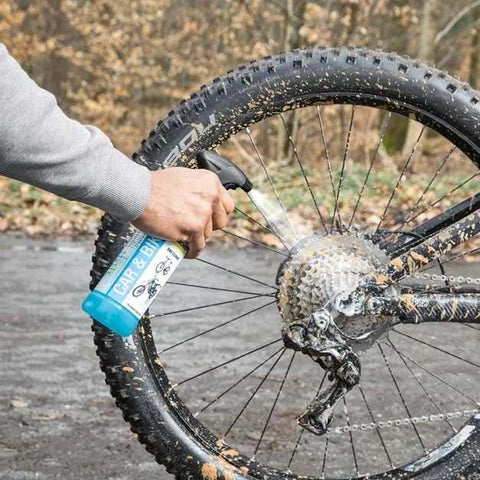
We have informed you about the characteristics and maintenance methods for each material, but some aspects may be difficult to imagine when considering an actual bicycle.
Therefore, we will provide information about the bicycle as a whole, also serving as a summary.
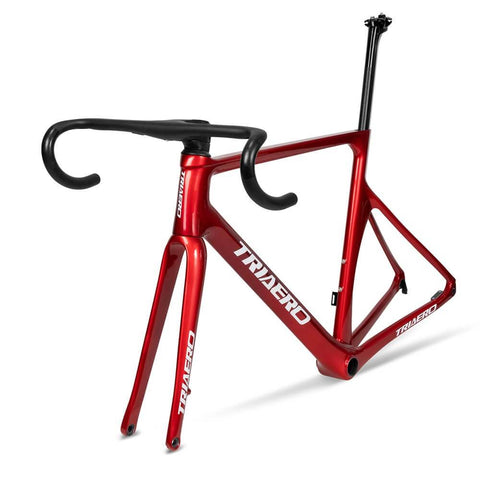
For the frame, you will need to maintain it according to whether it is carbon, chromoly (iron), or aluminum, referring to the above.
It would be best to wipe it dry if it gets wet.
However, if it's muddy water rather than rain, it might develop an odor later, so it's better to rinse it with clean water first, like tap water, and then wipe it dry to make it cleaner.
Even iron and aluminum won't rust immediately with water.
However, if left wet, they will turn yellow due to contact rust.
After getting wet, wipe it dry, and then finish by wiping with a dry rag (or cloth).
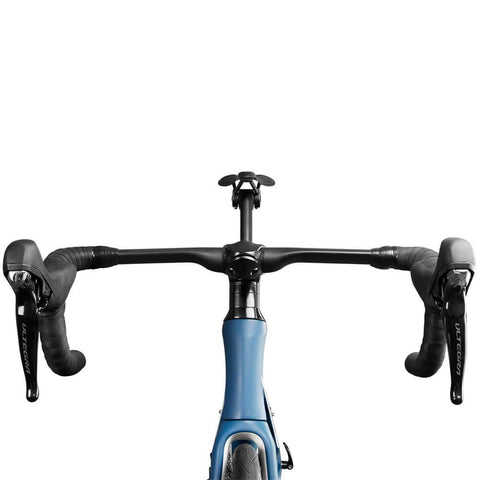
If the handlebar is shiny silver, it's highly likely to be nickel-plated iron.
If it gets wet, simply wiping it dry is sufficient.
Many parts, such as the saddle fixing screws and levers, are made of iron + nickel plating.
Here too, basically, wiping them and drying them is sufficient.
Pedals are often made of resin, so rinsing them off is fine, even if you don't wipe them.
However, the metal part of the axle is likely iron, and bearings, which are difficult to dry once water gets in, are used inside, so make sure to dry them thoroughly.
Removing it and swinging it to shake off water by centrifugal force, or using the dehumidifier method mentioned above to evaporate the moisture, are effective.
Brake wires and the like are coated, so simply wiping them with a cloth is sufficient.
Tires are rubber, so washing them and leaving them as is is fine.
If the rim is silver, I believe it's iron + nickel plating.
Wiping it dry should be sufficient.
Even for carbon, wiping it dry is sufficient.
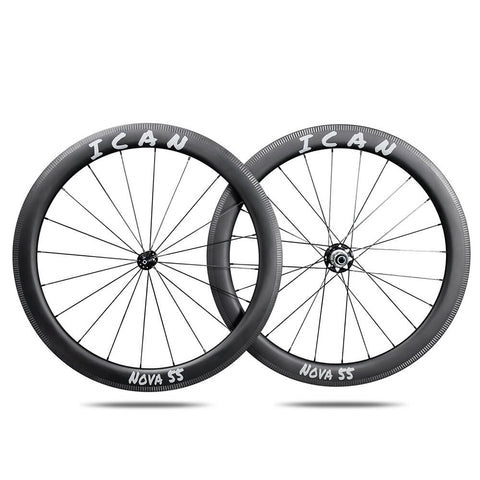
Overall, there are narrow gaps where moisture tends to remain, so using something with a thin tip, like a cotton swab, can effectively absorb it.
Once it rusts, there is a method to remove rust with acid, but if you don't neutralize it with alkali afterward, it will rust even more, so it's often difficult for non-experts.
It's definitely better to focus on wiping it to prevent rust.
From when it gets wet in the rain to when it's submerged, let's keep your beloved bike in good condition with appropriate countermeasures.