![AERO 40 Ⅱ ディスクブレーキホイール[リム内幅23mm] - ICANホイールジャパン](http://icanjp.com/cdn/shop/files/1_d90bc651-48bd-4f22-9e13-6d963c283ba6_1370x.jpg?v=1753869976)
![AERO 40 Ⅱ ディスクブレーキホイール[リム内幅23mm] - ICANホイールジャパン](http://icanjp.com/cdn/shop/files/2_37e9600e-9785-4d45-abe1-df49da71e7ee_1370x.jpg?v=1753869976)
![AERO 50 Ⅱ ディスクブレーキホイール[リム内幅23mm] - ICANホイールジャパン](http://icanjp.com/cdn/shop/files/ICANAERO50IIDiscWheels_1_1370x.jpg?v=1758088613)
![AERO 50 Ⅱ ディスクブレーキホイール[リム内幅23mm] - ICANホイールジャパン](http://icanjp.com/cdn/shop/files/ICAN_AERO_50_II_Disc_Wheels_2_1370x.jpg?v=1758088881)


![FL40Ⅱ ワイドリムロードカーボンホイール 軽量「内幅23mm] - ICANホイールジャパン](http://icanjp.com/cdn/shop/files/1_771b4686-2e73-4d35-b47c-b123b298f7f7_1370x.jpg?v=1755486826)
![FL40Ⅱ ワイドリムロードカーボンホイール 軽量「内幅23mm] - ICANホイールジャパン](http://icanjp.com/cdn/shop/files/2_76389d17-9f29-42af-aa59-a695414fcaf7_1370x.jpg?v=1755486826)
Bicycles full of fun! What's the appeal of a fat bike?
I've started seeing fat bikes in my neighborhood too.
They really stand out, so you notice them right away.
With such thick tires, they look like they'd be hard to pedal. That's how I used to see them.
But the more I learned about fat bikes, the more appealing they became.
"Why thick tires?" "What kind of situations are they used in?" "Is pedaling difficult?" "What's the price, anyway?" "Aren't they just mountain bikes?"
I'm sure you have many questions too.
What are fat bikes?
Have any of you seen a fat bike?
Even if you haven't seen one, you've probably heard the term "fat bike."
The sheer impact of those thick tires is overwhelming, isn't it?
Fat bikes are said to have originated in America as race bikes for severe winter conditions.
In Japan, they've started gaining popularity in snowy regions, where many people apparently buy them for commuting.
This time, we'll explore the appeal of fat bikes.
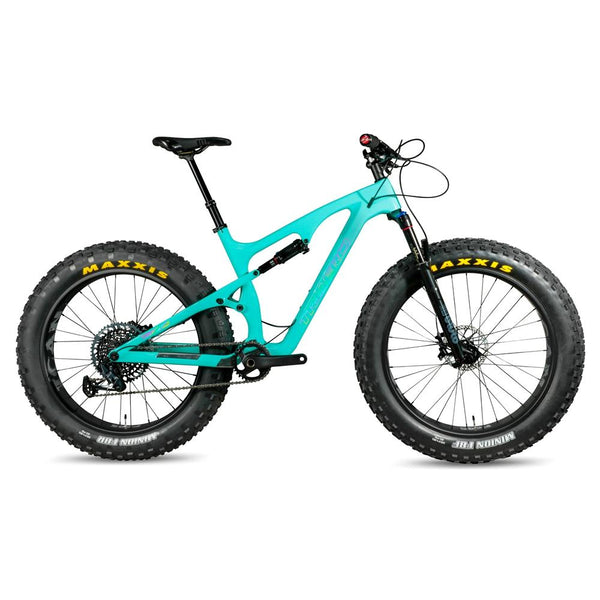
Fat bikes feature thick tires
Fat bike tires range from 4 inches to as large as 5 inches.
That's a tire width of 10cm for 4 inches, and nearly 13cm for 5 inches.
They're really thick!
You can imagine the stability they provide while riding due to their thick tires.
They were originally designed for riding on snow, which is why they have such thick tires.
However, some might think that thick tires make it hard to get started pedaling.
But surprisingly, getting started is smooth.
Do they go fast?
Compared to lightweight bicycles like road bikes and cross bikes, fat bikes are heavier, so they don't go as fast.
How heavy are they? Entry-level models weigh around 20kg. Typical fat bikes are just under 15kg.
While that sounds heavy, it's about the same as a utility bike (mamachari).
If you imagine a utility bike, you can picture that they don't go very fast.
Ultimately, fat bikes are meant for enjoying the ride like an MTB (mountain bike) rather than for speed, so please overlook the speed aspect!
*For clarity, here's a brief explanation of the difference from MTBs:
MTBs absorb shocks with a suspension system.
However, fat bikes absorb shocks by adjusting tire pressure. This is the big difference.
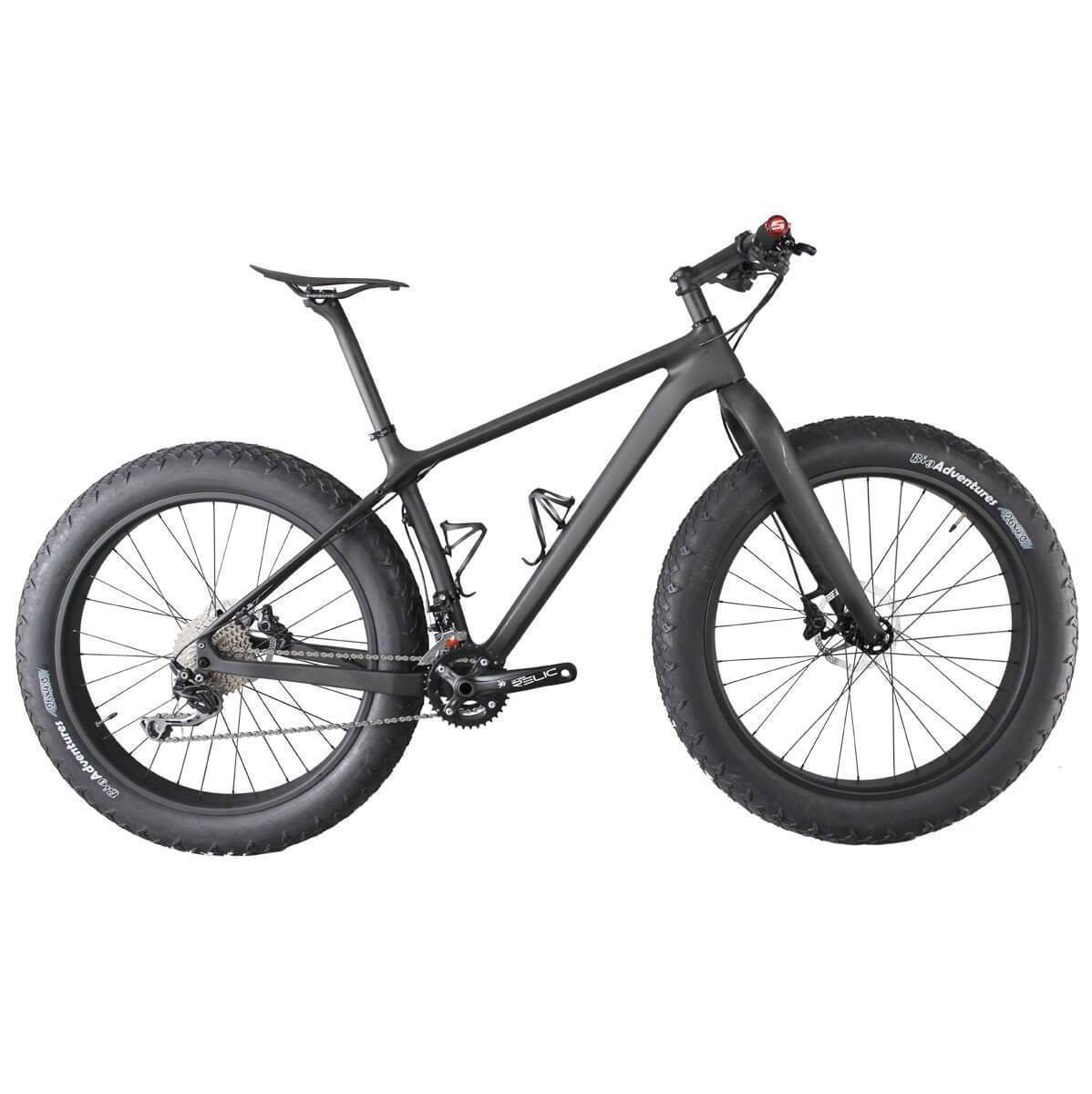
Adjusting tire pressure: Two ways to enjoy
One of the pleasures of fat bikes is the ability to change the tire pressure.
What does this mean?
- Inflate the tires fully to improve riding performance (enjoy light riding)
- Lower the tire pressure to enhance stability and cushioning (enjoy reducing shocks on rough terrain)
Doesn't just hearing about this make you excited?
You wouldn't think of this with road bikes, would you?
With road bikes, I always thought you had to keep the tire pressure strictly at the standard value, so the idea of "changing tire pressure to enjoy" with a fat bike was groundbreaking.
They really stand out!
I've started seeing them in town lately. I remember at first thinking, "Whoa! What kind of bike is that?!" and staring intently.
Their appearance certainly makes a strong impression.
The thickness of the tires was particularly striking.
I remember thinking I'd like to try riding one and wondering what the ride felt like.
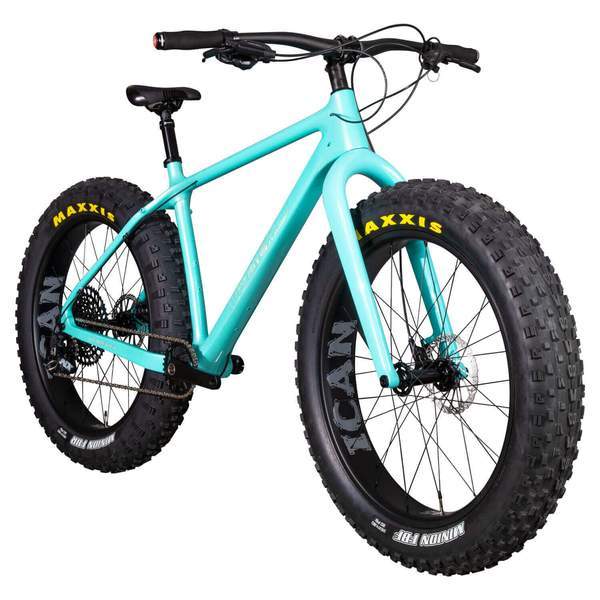
Using a fat bike in daily life
Can fat bikes be used for everyday riding?
Many people might hesitate to buy one because they won't be riding through forests or mountains.
They offer excellent stability, making them suitable for daily use.
The only downside I can think of is their high price.
Therefore, robust anti-theft measures are necessary.
Beware of buying "look-alikes"
Fat bikes are very appealing.
Some of you might want to buy one right away.
If you search online, you'll find that they can be purchased at surprisingly low prices.
However!
You need to be careful here. Most genuine fat bikes cost over 200,000 yen.
Fat bikes that can be bought for tens of thousands of yen are called "look-alikes." While they might look like fat bikes, most have very little frame rigidity.
If you buy a "look-alike," forget about riding in forests; you should even avoid riding on rough roads or over steps.
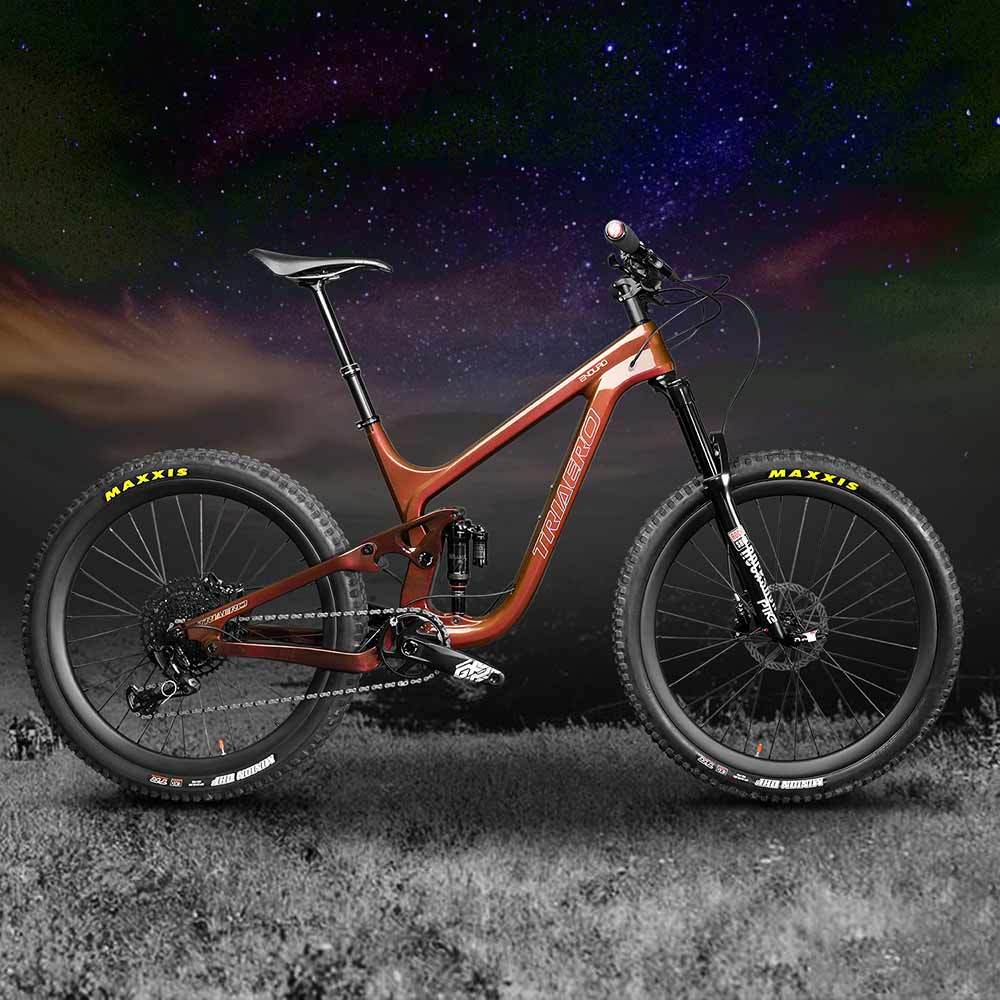
Using fat bikes for commuting to work or school
So, how are they for commuting to work or school?
If you're commuting long distances, the bike's weight might make hills challenging.
However, since they're not much heavier than utility bikes, there's no problem if you can commute long distances on a utility bike.
Plus, they're eye-catching bikes, so if you want to be the center of attention, using one for school might make you instantly popular!
They're also very Instagrammable, so you might find yourself surrounded by people asking to take pictures!
As mentioned earlier, fat bikes are designed for racing in severe winter conditions.
This means they are less likely to slip in rain or snow.
While there's no need to intentionally ride in bad weather, it can be said that they handle rough roads without issue.
I've shared the appeal of fat bikes.
I'm actually planning to buy one myself.
However, as I mentioned, "look-alikes" have issues with frame rigidity and are not suitable for riding on rough terrain.
Even on general roads, it's probably best to avoid areas with severe bumps.
I doubt such bikes exist now, but when I was a child, I once rode over a step and the bicycle frame snapped clean in half.
That's what frame rigidity is all about.
If you're buying a fat bike, even if it's a bit more expensive, consider it an investment in safety and I recommend the reliable ICAN.
ICAN fat bikes have achieved lighter weights, with some weighing under 15kg, and are perfect for any scenario, from city riding to snowy fields and rough terrain!